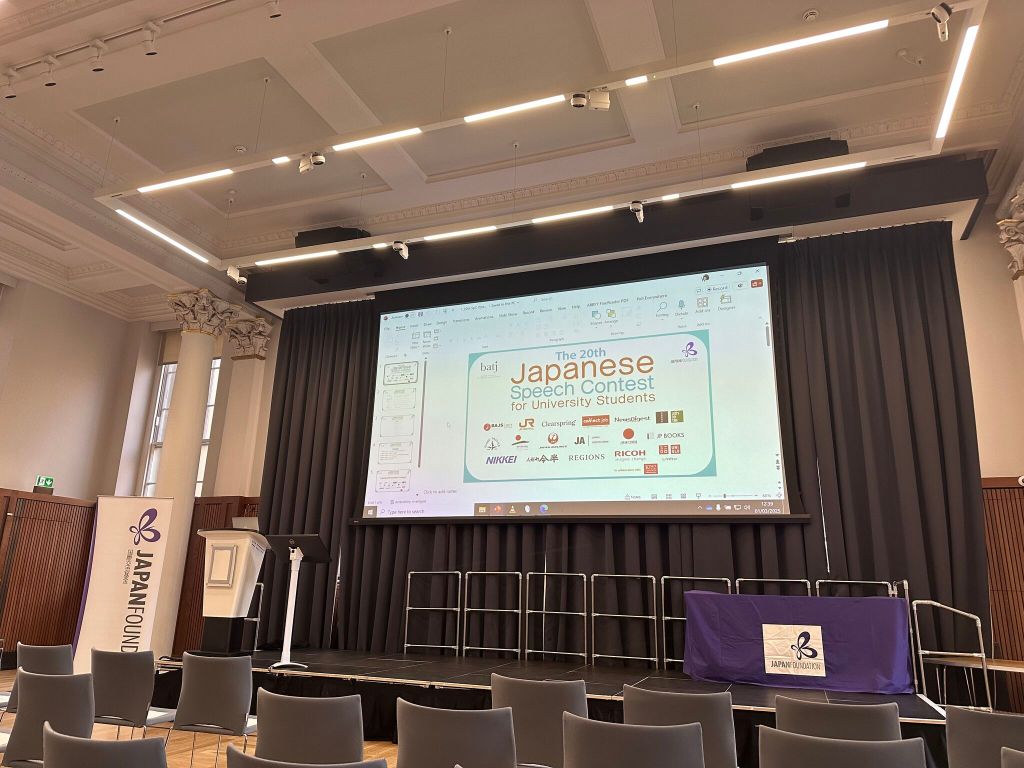
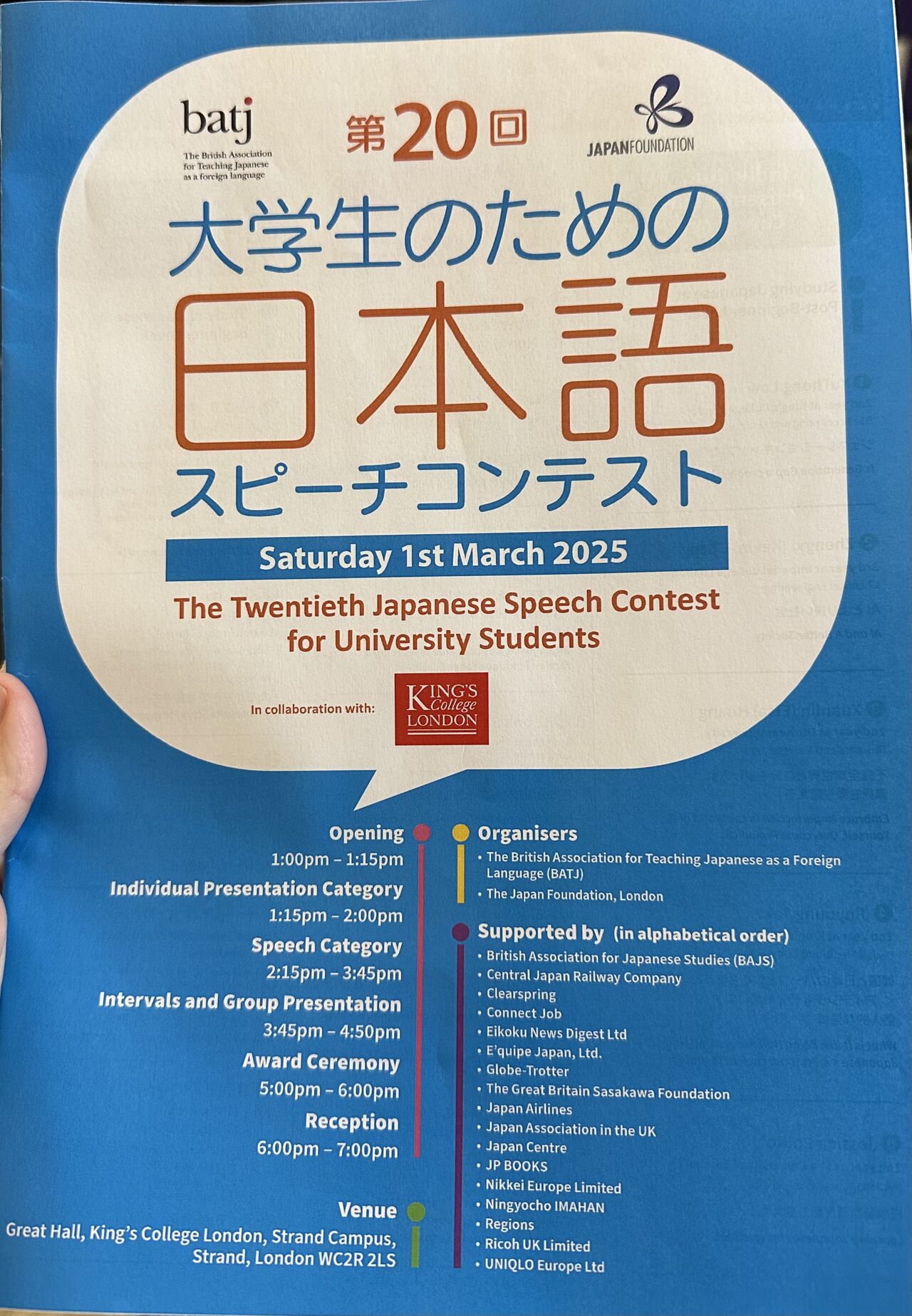
I really enjoyed the 20th Annual Japanese Speech Contest for University students held at King’s College London on March 1st, 2025.
My first encounter with a speech contest was tutoring my junior high school students. I would coach them after school for weeks and week. Then finally attend their contests on the weekends. They worked so hard and I still remember both Shion and Tomohiro today, 15 years later. My next experience was from the other side – running a speech contest at a private language school. I now appreciated how much preparation went into the organisation, judging and smooth running of a contest. Still, a niggling doubt remained of whether reciting a speech was really a good way to learn a language.
Seeing the Japanese speech contest in the UK made me really see how beneficial speech contests could be for language learner motivation. Firstly, I was so impressed with the ability of the students from all across the UK to express their views in Japanese so proficiently about sensitive topics, like whaling, AI and the Japanese new graduate hiring system. Secondly, the main speech presenters had to do an unscripted Q&A with an interlocutor. Of course, students may anticipate some of the questions that may be asked and prepare. Although it did seem many of the questions were unexpected (like a question on a speech about toxic masculinity that the questioner asked about how this relates to LGBTQ issues). It was a real challenge and to see them think and respond on the spot using their whole language repertoire was inspiring.
I was really moved by Jessica Polito’s from the University of Edinburgh’s presentation about how learning Japanese changed her. I found her message of perseverance with language study and making mistakes being a natural part of this was something I needed to hear as I aim toward taking the N1 level of the JLPT proficiency test. She was the well deserved winner in the presentation category.
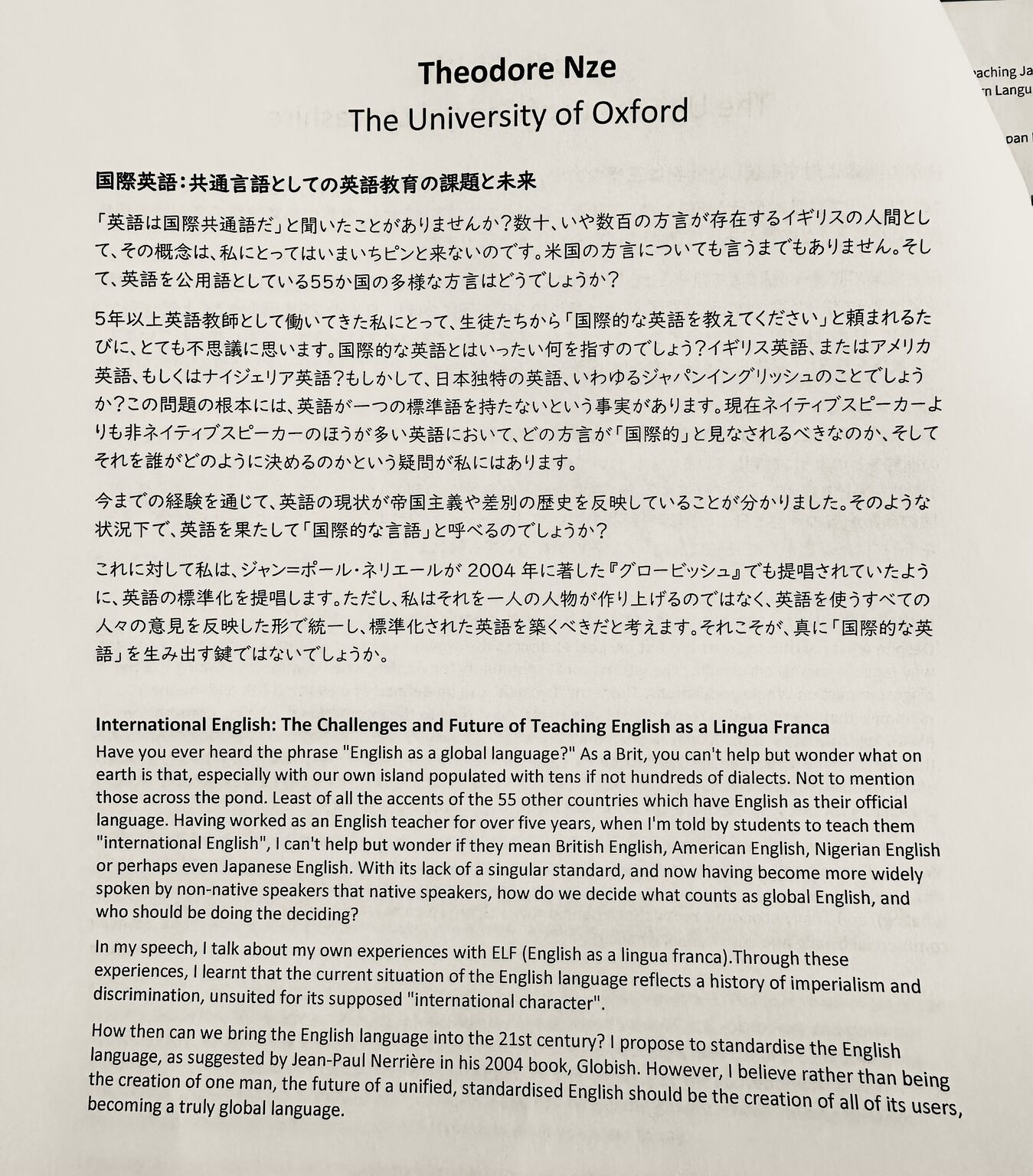
Finally, a speech on English as a Lingua Franca was a welcome curveball. Listening in Japanese to a talk about what kind of English we should be teaching to students was not something I expected today! The presenter, Theodore Nze from the University of Oxford, was a charismatic presenter with amazing Japanese ability. He talked of his experiences of Nigerian English. He also discussed how ‘karaoke’ is from Japanese ‘karakara’ meaning empty and ‘oke’ short for ‘orchestra’. When pronounced in Japanese, it is /ˈkɑːɹɑːˌoʊkeɪ/ but in English would be /ˈkæ ɹiˌəʊ ki/. When teaching Japanese students, should he correct their pronounciation of a word from Japanese as it is used in English to be intelligible to native speakers? It was a thought-provoking talk and well deserved second-place in the speech category.


 RLM Slinn-Funabashi
Leave a comment